
Territory changes are inevitable.
Markets shift. Teams grow. Coverage gaps emerge. Leadership asks for “just a small adjustment.”
And yet, few changes create more anxiety—or resentment—than territory redesigns done poorly.
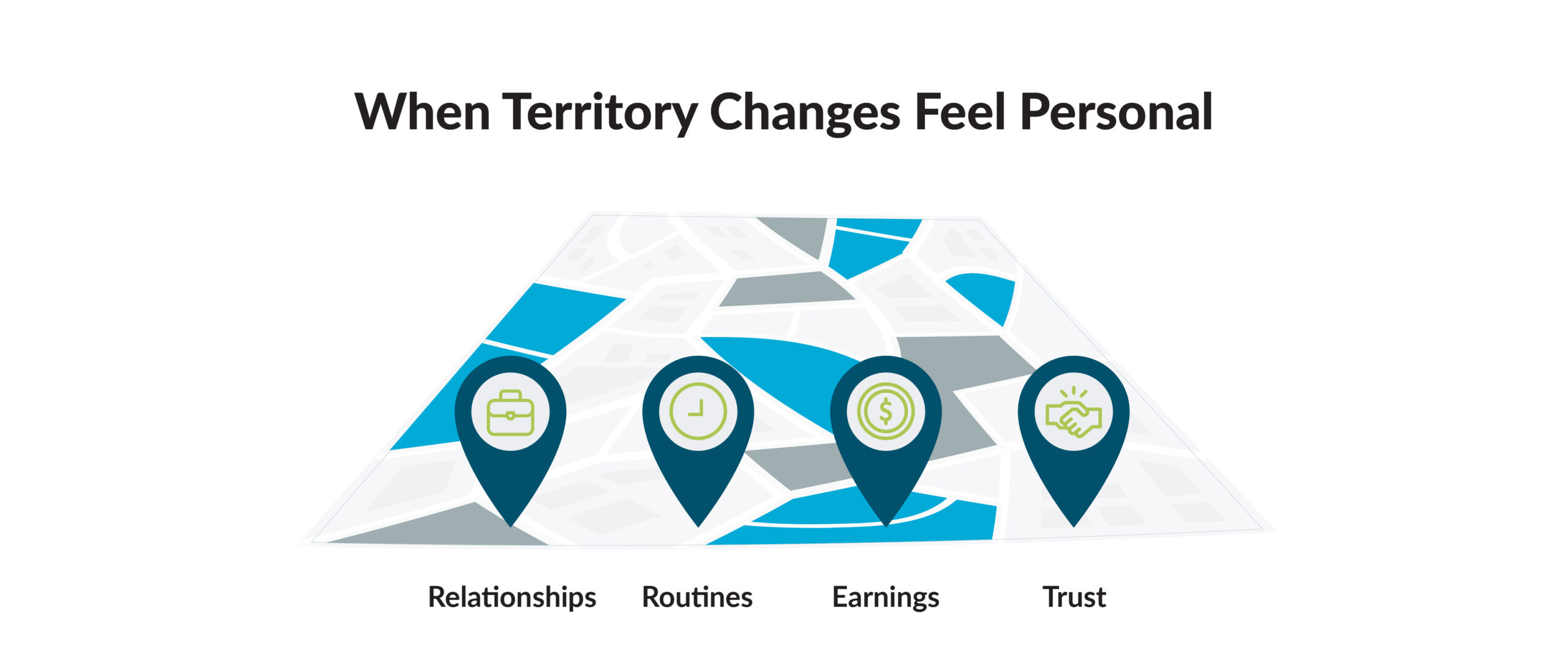
For field sales teams, territories aren’t just lines on a map. They represent relationships, routines, income expectations, and trust. When changes feel arbitrary or opaque, morale drops fast—often faster than performance metrics can catch it.
The good news: territory changes don’t have to damage morale. With the right approach, they can actually increase trust, engagement, and results.
Here’s how modern field teams plan territory changes without breaking their teams in the process.
From leadership’s perspective, territory planning is a math problem:
From a rep’s perspective, it’s deeply human:
When territory changes are communicated as final decisions—without context—reps often assume the worst. Even well-intentioned updates can feel like punishment rather than progress.
That disconnect is where morale erodes.
Nothing damages trust faster than unexplained changes.
When reps don’t understand why territories are shifting, they fill in the blanks themselves—and those stories are rarely charitable.
What works instead:
Make the logic visible. Show the inputs behind the decision:
Visual territory models help here—not because they’re flashy, but because they make tradeoffs tangible.
Big-bang territory changes feel disruptive and destabilizing, especially for field teams who rely on consistent routines.
What works instead:
Plan for incremental adjustments:
This signals that territories aren’t static—and that change is a normal, manageable part of growth.
A territory that looks balanced in a spreadsheet can be unworkable on the ground.
If leadership doesn’t account for:
…reps feel unheard—and overworked.
What works instead:
Ground territory changes in real-world execution:
Territory plans should reflect how work happens, not how it looks on paper.

Fairness isn’t about everyone liking the outcome. It’s about everyone trusting the process.
High-performing teams do a few things consistently:
Instead of presenting a single “new” territory model, show alternatives:
When reps can see how decisions were evaluated, resistance drops—even if the outcome isn’t perfect.
Territory changes should connect to outcomes everyone cares about:
When changes are framed around shared goals—not leadership mandates—they feel purposeful rather than punitive.
Territory planning shouldn’t be a once-a-year event.
Teams that maintain morale treat territories as living systems:
This reinforces a powerful message: we’ll keep improving together.
The biggest shift modern teams make isn’t philosophical—it’s practical.
Moving from spreadsheets and static documents to visual, real-time territory planning changes the dynamic entirely:
When everyone can see the same map, conversations become clearer—and trust follows.
Territory planning will always involve change. But morale damage is not inevitable.
When teams:
Territory changes become a signal of maturity—not instability.
Done right, they don’t just preserve morale—they strengthen it.
See how modern field teams manage territory changes visually
→ Explore how Geopointe helps teams plan coverage without losing trust